Henry Maitland
The Chemistry of DeathHenry Maitland is Manham’s established doctor and David Hunter’s employer, later becoming his partner in the village practice. After a car accident left Henry unable to walk and killed his wife, Diana, he could no longer manage the work alone. His recruitment of David therefore begins as a practical response to changed circumstances, but develops into a durable professional relationship. Henry’s place in the story also gives weight to the question of who belongs in Manham: he understands the village’s resistance to change, while David remains an outsider even after years of service.
Identity and Background
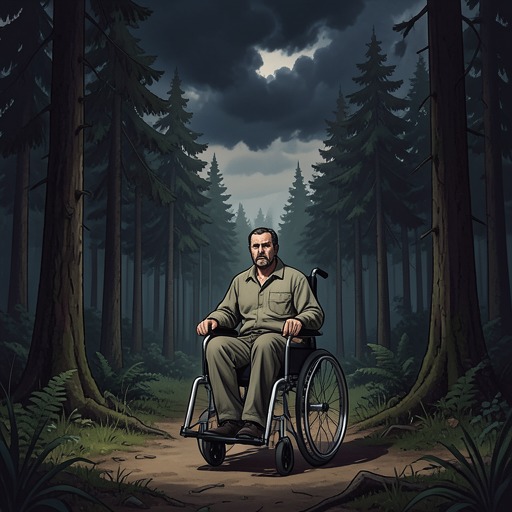
Henry is a doctor who lives and works at Bank House, where part of the large house serves as the clinic and another part as his private living quarters. When David arrives to take up the position, Henry greets him from a wheelchair. He does not disguise the reason for the hiring: an accident has left him unable to manage by himself, and he has been relying on locums for about a year. The changing faces have become unsatisfactory for him and, he believes, for the patients, who dislike change.
Henry speaks about his condition without self-pity or embarrassment. At the same time, he has not immediately accepted the finality of it. He had hoped to recover some use of his body and had bought an automatic Land Rover Defender with the intention of driving again. The car was a statement of that hope, but the doctors assured him that he would neither walk nor drive again. Eventually, Henry accepted their assessment. The old vehicle later became David’s, as did an increasing share of the practice.
Appointment and Professional Partnership
David accepts Henry’s job by post, without an interview. Henry explains that interviews take time and that he wants someone able to start quickly; he also trusts his own judgment. David finds that confidence reassuring, and only much later learns that he was the sole applicant. The appointment thus rests less on a competitive selection than on Henry’s decision to take a chance on a doctor who admits to having limited general-practice experience.
The arrangement is initially temporary. Henry never recovers enough to return to full-time work, so David’s contract is extended and then converted into a partnership when it becomes clear that Henry cannot run the practice alone. At first, the two divide the workload more or less equally. Over time, more of it falls to David. Henry nevertheless remains, in the eyes of many Manham residents, the proper doctor. David eventually stops resenting that distinction, but it marks the difference between his growing practical responsibility and Henry’s older, more established standing in the community.
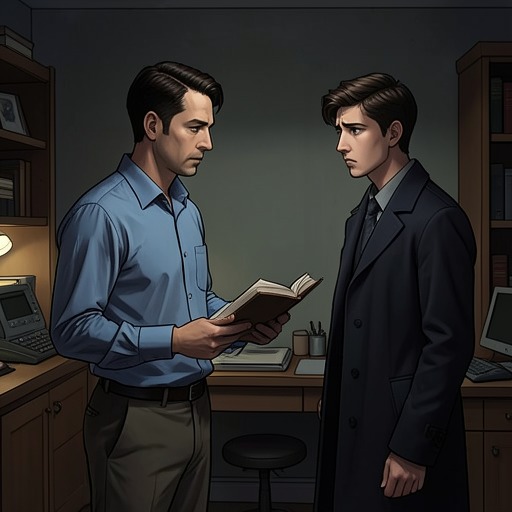
The physical setting of the surgery reflects that continuity. David works in Henry’s former consulting room, among the older books, journals, and furnishings that preserve the character of Henry’s working life. David’s computer is a newer addition, accepted by Henry only after months of persuasion. Their collaboration therefore involves more than dividing appointments: the practice changes gradually, with David introducing an innovation while continuing to work within a place shaped by his predecessor and partner.
Relations with David and Manham
Henry’s professional relationship with David is marked by frankness and a measure of trust. He is candid about why he needs help, but does not treat David as a patient or invite him to pity his circumstances. His direct manner also appears in the hiring conversation, where he turns David’s doubts back on him rather than offering an elaborate assurance. Later, Henry’s confidence in his judgment becomes a small but revealing story about David’s entry into the practice: there had been no other applicants, though Henry did not tell him so at the time.
Henry’s bond with Manham is different from David’s. He has the authority of a long-standing local doctor, while David remains conscious of being a newcomer. That contrast becomes especially visible after the murders disrupt the village. When David studies photographs of Sally Palmer’s body, Henry comes to the surgery after Janice tells him the police have visited. He initially asks whether local people have been interfering with livestock, then becomes serious when David indicates that there is a problem. The exchange places Henry within the ordinary life of the practice even as the investigation begins to intrude upon it.
After Lyn Metcalf’s body is found, Henry and David attend the church service. Henry waits outside rather than enter the church, explaining that he wants to pay his respects but will not indulge Scarsdale or listen to his account of the deaths as divine judgment. He watches Scarsdale speak to journalists in the churchyard, while children scramble over the Martyr’s Stone behind him. Henry’s refusal to join the public performance of the tragedy distinguishes private respect for the dead from the use of the murders to advance a public message.
Change and Narrative Significance
Henry’s disability changes his working life, but the narrative also records the practical sequence of that change: locums, David’s appointment, an extended contract, a partnership, and a gradual transfer of more work to David. The account does not reduce Henry to the accident. He remains a doctor with opinions about medicine, patients, and the village, and he retains a professional identity even as his capacity to practice independently diminishes. His continuing authority among local patients further complicates the transfer of responsibility: David may do more of the work without inheriting Henry’s place in the community.
At the novel’s end, David does not return to work at the surgery after the police leave Bank House. The events have made it too painful for him to go back, so he arranges for a locum while the practice awaits a permanent replacement or patients register elsewhere. His former patients regard him with reserve; some still see him as the newcomer who was once a suspect. David recalls Henry’s earlier understanding of his position and concludes that he never belonged in Manham. Henry’s significance therefore extends beyond recruiting David. His experience of the village’s resistance to change anticipates the limits of David’s own integration, and the closing decision to leave turns the professional partnership into one stage in a life that Manham could not make permanent.